Womb of Night
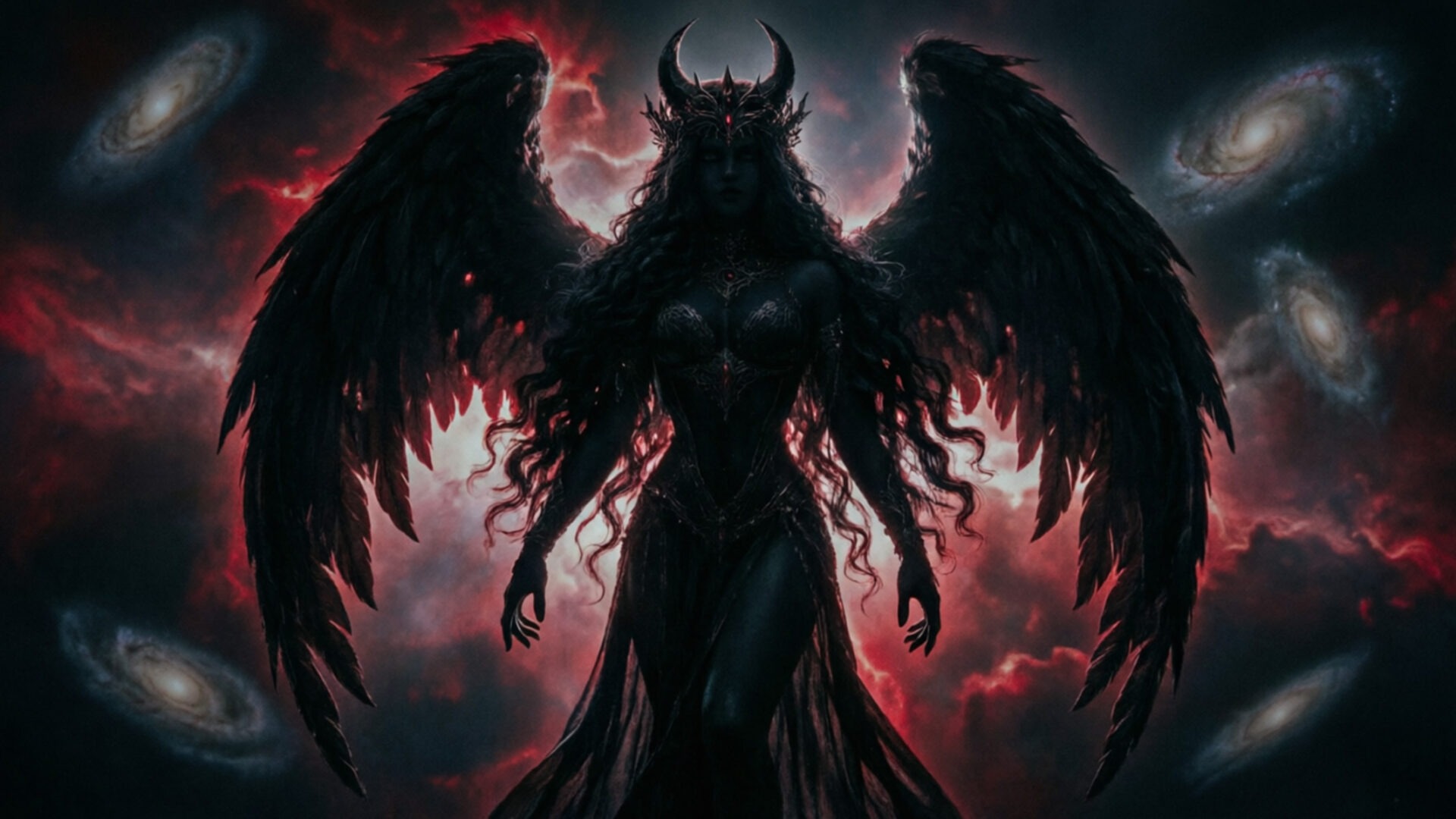
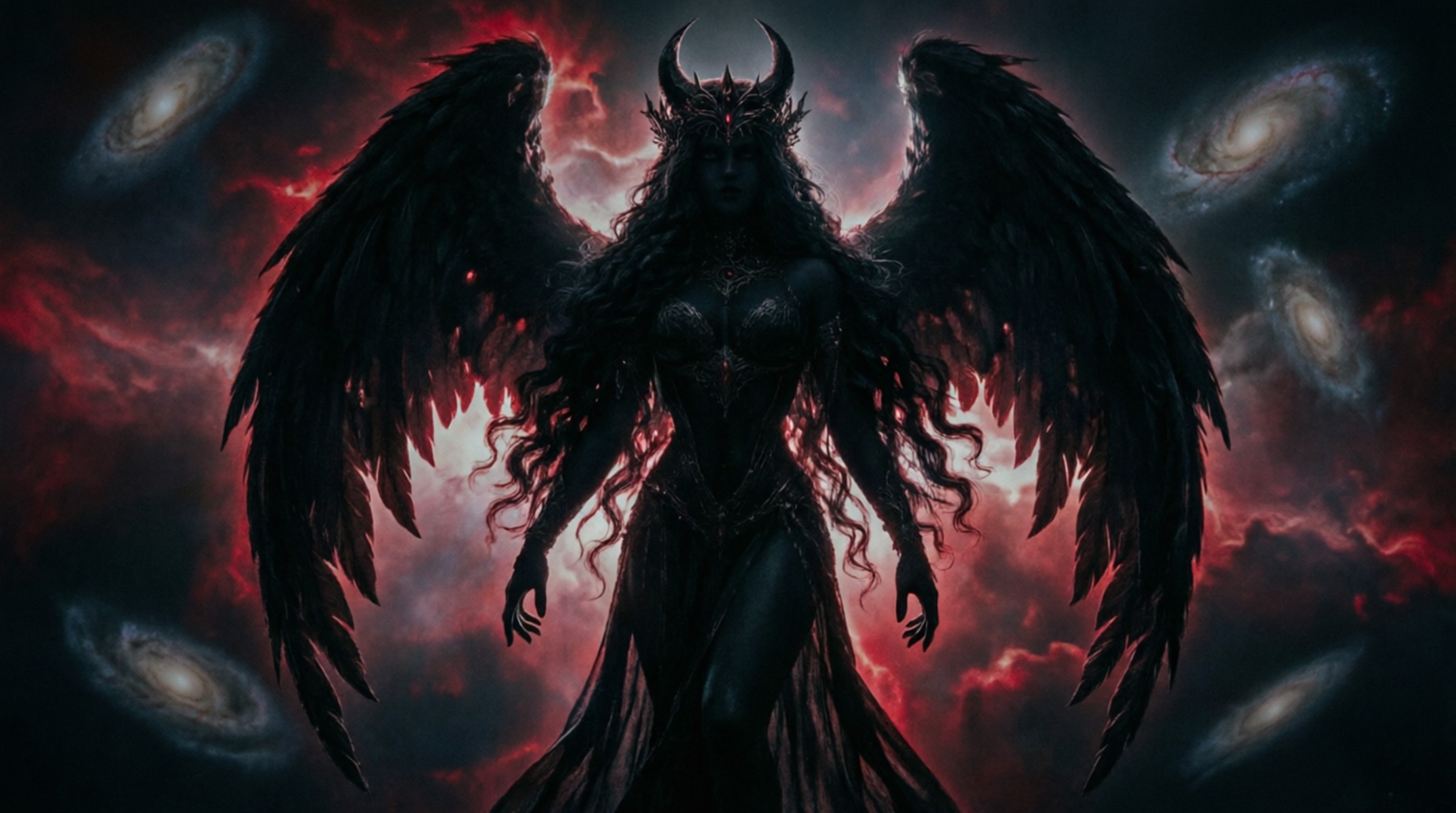
In the quiet moments before sleep, or in the sudden stillness between thoughts, there is a presence that feels both intimate and vast. It’s not a thing to be grasped, nor a concept to be understood, but the very space in which understanding occurs. This presence is often overlooked in a world that prizes brightness, definition, and constant activity. Within Radiant Obscurity, this foundational ground is invoked through the name Lilith. This isn’t a reference to a mythological demon or a separate deity, but a poetic pointer to the formless, alive presence of awareness itself. It’s the radiant obscurity from which all forms arise and into which they dissolve.
For many, the name Lilith carries historical baggage, often associated with rebellion or darkness. However, when stripped of cultural projection, the symbol serves a precise function. It points to the “womb of night,” a metaphor for the unmanifest potential that precedes all creation. Just as a womb holds the possibility of life before it takes shape, this formless awareness holds the possibility of all experience before it becomes thought, emotion, or action. Recognizing Lilith as the womb of night isn’t an act of worship toward an external figure, but a turning of attention toward the source of one’s own being.
The Veil That Unveils
A central paradox in this exploration is the nature of the veil. Conventionally, a veil is seen as something that hides, obscuring the truth from view. We’re taught to lift the veil, to pierce through illusion, to find the light behind the darkness. But what if the veil and the revealed aren’t two different things? What if the act of veiling is simultaneously the act of unveiling?
As suggested in the dialogues, the divine presence is described as “She who veils and unveils in a single gesture.” This insight challenges the dualistic habit of separating the real from the apparent. The forms of the world, our bodies, our relationships, our daily tasks, are the veil. They’re the specific shapes that awareness takes. They’re also the unveiling, because they’re made of nothing other than awareness itself. To see the form is to see the substance. There is no hidden reality behind the curtain; the curtain is the reality, dancing.
When one stops trying to look past experience to find some deeper truth, and instead looks at experience as the expression of truth, the search ends. The anxiety of missing out on some secret knowledge or technique dissolves. The “radiant obscurity” isn’t a dark place to be feared, but the luminous depth where seeing and being are one. It’s called obscure not because it’s unknown, but because it’s too close to be seen as an object. It’s the eye that cannot see itself, yet it’s the condition for all seeing.
Formless Awareness in Daily Life
How does this abstract concept translate to the friction of modern life? Consider the experience of stress or uncertainty. Often, the mind reacts by tightening, by trying to control outcomes, by seeking certainty in a future that hasn’t arrived. This contraction is a forgetting of the ground. It’s a belief that one is a separate, fragile entity navigating a hostile world.
Invoking the spirit of Lilith offers a different response. It isn’t a technique for fixing problems, but a shift in identity. Instead of identifying as the thinker struggling with a problem, one identifies as the space in which the thinking is happening. This space isn’t affected by the content of the thoughts. It’s the “womb” that holds the emotion without being consumed by it.
Imagine a moment of intense anger or fear. Usually, we become the anger. We’re swept away by its narrative. But if one pauses and notices the awareness that knows the anger is present, a subtle shift occurs. The anger is still there, but it’s no longer the totality of existence. This recognition brings a natural ease. It doesn’t suppress the emotion, but it removes the secondary suffering of resisting it.
This is the practical power of recognizing formless awareness. It allows for full engagement with life without being trapped by it. One can perform duties, engage in relationships, and pursue goals, but with a lightness of touch. This is the freedom of moving through the world while resting in the “radiant obscurity” that underlies it.
The Play of Differentiation
The text emphasizes that multiplicity isn’t a mistake. The world of forms isn’t an illusion to be escaped, but a play of expression. The Great Abyss, or the undivided ground, expresses itself in ever-changing forms. It becomes the tree, the star, the human body, the thought. These aren’t separate entities cut off from the source; they’re the source expressing itself in specific ways.
When we see Lilith as the source of this play, we stop judging experience. We stop labeling some states as “spiritual” and others as “mundane.” The silence of meditation and the noise of traffic are both modifications of the same field. The joy of connection and the pain of loss are all Her play. This perspective fosters a deep compassion, not just for others, but for oneself. It allows for the acceptance of the full spectrum of human experience as valid expressions of the one reality.
Embracing the Radiant Obscurity
To live from this recognition is to embrace the unknown. The mind craves certainty, definitions, and labels. It wants to pin things down. But life is fluid, constantly changing, emerging from the void and returning to it. By making friends with the “womb of night,” we make friends with change itself. We learn to trust the process of emergence and dissolution.
This doesn’t mean becoming passive or indifferent. On the contrary, it allows for more authentic action. When action arises from the fullness of presence rather than the lack, it’s more effective and less exhausting. It’s aligned with the flow of life rather than fighting against it. The “radiant obscurity” isn’t a void of nothingness, but an assembly of everything. It’s rich with potential, waiting to be expressed.
The journey of recognition isn’t about acquiring something new, but about remembering what has never been absent. Lilith, the womb of night, is a symbol for this ever-present ground. It reminds us that we aren’t separate fragments adrift in the universe, but expressions of a living, aware whole. The veil of form isn’t hiding the truth; it’s the truth wearing a mask.
By shifting identification from the fleeting forms to the formless awareness that sustains them, we find a stability that isn’t dependent on circumstances. We find peace not in the absence of noise, but in the depth that contains it. We find home not in a distant future, but in the immediate present.
A Challenge for Your Week
For one week experiment with the practice of resting in the womb. Choose one daily activity: drinking your morning coffee, walking to your car, or washing dishes. Instead of rushing through it or letting your mind wander to the past, future, or elsewhere, pause. Notice the awareness that is present. Feel the sensations, hear the sounds, and rest as the space that holds them. Don’t try to change anything. Simply notice the “radiant obscurity” that is already here.
Which strategy will you choose to integrate this recognition into your day? Will you use a specific ritual, a moment of pause, or a shift in perspective during a challenging interaction? Share your approach and insights that arise in the comments below.